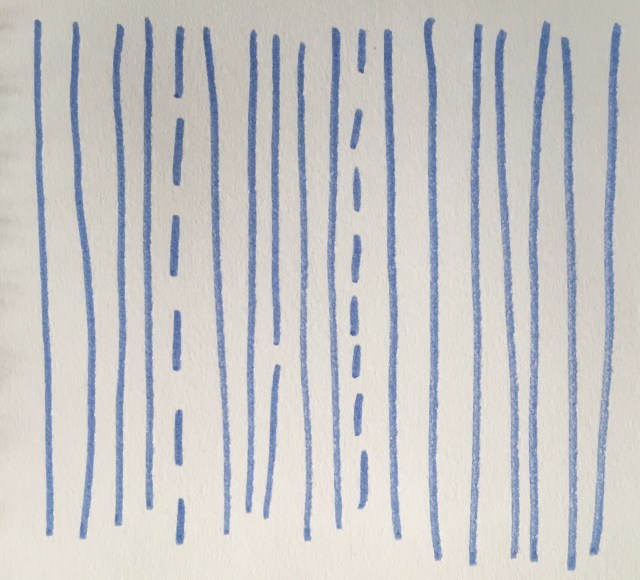
2052
Holding pattern

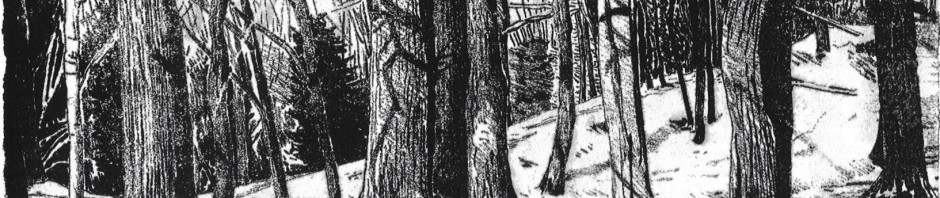
2052
Holding pattern
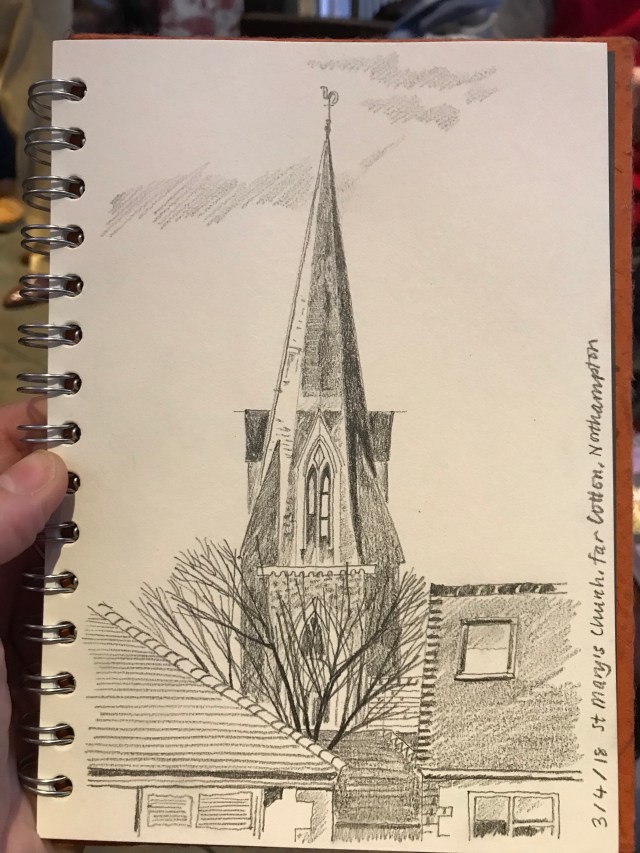
2050
St Mary’s Church, Far Cotton, Northampton
4B pencil
A5
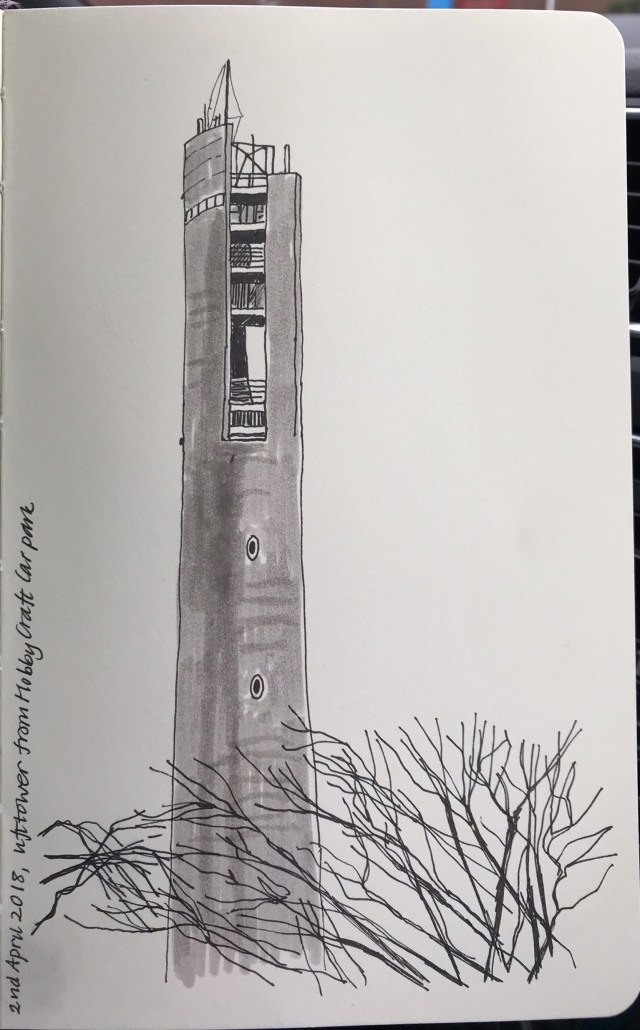
2049
Lift tower from Hobbycraft car park
Pen
A5
2048
Day 3 of a three day collagraph course at Leicester Print Workshop


Above are my sealed collagraph pieces before inking, and then what they liked like after inking but before printing. Inking up a number of pieces that will work together in one  print is quite a challenge. When making and inking them its easy to get caught up with each one as an individual piece instead of retaining the sense of the single print. There were so many ways that these could have been inked up that I didn’t end up using some of the ways that Charles had demonstrated yesterday. There are areas and pieces in the print to the right that I can learn from in future prints. The advantage of being at Leicester Print Workshop was that there’s lots of room to have a range of colours out and lots of rollers, unlike at home. But that does result in too much choice! Some of the other participants prints of pieces were absolutely fantastic.
Charles also demonstrated how to work with two plates, one dark and one a colour. He showed us how to print the main plate in black onto a piece of newsprint. Then take a fresh piece of environmount, place the newsprint onto the plate print down and roll through the press again. The image is reversed back and if you seal you can then work onto it knowing where to cut away more precisely to give the colour of the ink and the colour of the page. Charles also suggested that we keep a record of how the colours we’re using are made in case we need to make them again later in the edition. Its been great to hear all so much practical advice from a very experienced printmaker.
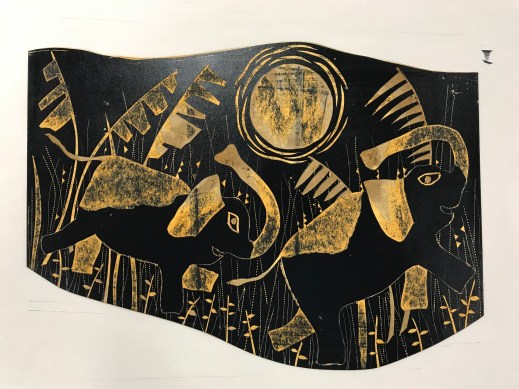 During the day I also carried with the elephants plate that I had begun yesterday. Now I understand the process a bit better there are things I could have done better with this plate. I needed to think about how to make the elephants stand out against the background by making them darker or lighter or more patterned or more textured in contrast to the
  background. Above is the plate after inking. Adding colour might also have helped, but time was running out.To the right is the plate after printing by surface rolling only. There are errors on this print primarily using the roller rather poorly resulting in lines in the moon and across the right hand elephant. I’m not very experienced with using a roller and the plate was wider than the roller so both these contributed to the lines.
Overall the three days were a great learning experience, giving me practical ideas and inspirations to help me renew and develop my printmaking.
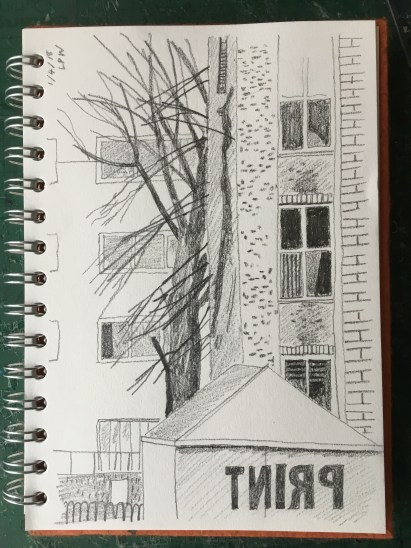
During today I had a few minutes to capture a view that had caught my eye over the last few days, looking through the front window out into the street, seeing the title of the building reversed on the front window.
2047
Day 2 of a 3 day collagraph course at Leicester Print Workshop
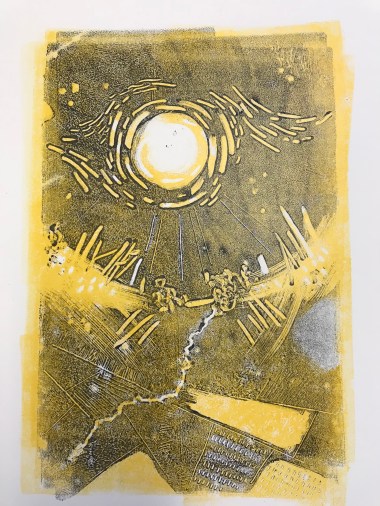
On the morning of the second day of the bank holiday collagraph course Charles showed us a way of mono printing without a press. First we rolled black oil paint onto an acetate sheet with a roller. We worked onto the surface using a rag to wipe with and tools to draw with. When we’d finished we placed a sheet of Five Seasons paper over the sheet and rubbed over it by hand and rolled over it with a hand roller. The next layer was made by rolling a colour onto another acetate sheet. This time the ink was thinned printmaking ink. Again we wiped and drew and in order to let this layer interact with the other we placed the yellow sheet over the black acetate that we had printed from. As I worked I needed to bear in mind that anything removed might be revealing the paper colour or the yellow ink from the acetate. Edges could have been wiped more cleanly. In order to register the 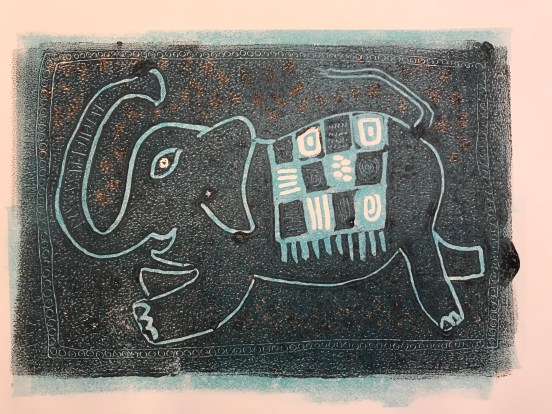 print, less of an issue here because I hadn’t really paid much attention to neat edges, I placed the yellow acetate face down onto the black print and then flipped it to roll over the back again. Its a great way to make a one off print using accessible materials. I went on to make the elephant print above using the colour overlaps more consciously. Both these prints are a bit larger than A4.
For the rest of the day we returned to making collagraphs, refining and building upon 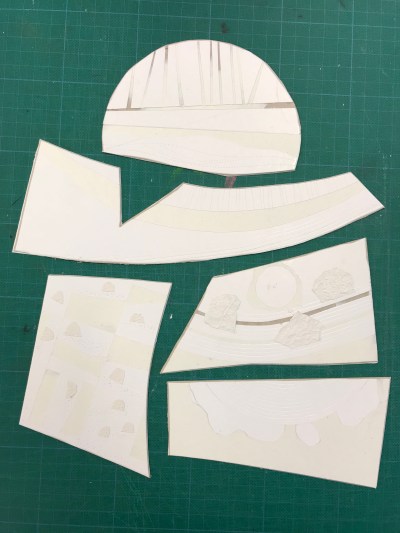 our learning from yesterday. The board we’re using is easy to cut so it lends itself to making prints from pieces and cutting into the board. When doing this Charles also introduced to the idea of cutting the edges of the card so it is bevelled – this is quite difficult at first but with practice does get easier. I made some pieces using the techniques from yesterday and also adding textured paper. Its also possible to add carborundum powder which holds the ink to make a dark tone. Charles demonstrated how to ink the pieces up both intaglio and surface rolling. I realised that its possible to use shapes with little or no marking on them as part of this inking stage and use the qualities of the roller to add colour and pattern. Tomorrow I’ll find out what I can do with the shapes above!
2046
Day 1 of a three day collagraph course at Leicester Print Workshop
A4
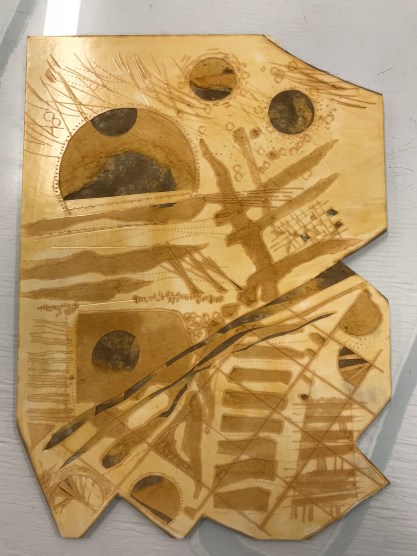
Today was day 1 of a three day bank holiday weekend collagraph course at Leicester Print Workshop, led by printmaker Charles Shearer. I signed up to this course as I want to recover my enthusiasm for collagraph printmaking, which latelyI have lost.
Today Charles introduced us to a way of making a collagraph plate that’s completely different to my former approach, which was basically intaglio, like etching. In this version of making the plate we used Environmount board. This has a smooth top surface and several under layers.  We used various mark making tools and knives to mark to card plate, peeling off layers, drawing, pressing into and generally experimenting. At first I found it hard to reverse my thinking, to realise that anything that was peeled away would be lighter or white, revealing the paper we print onto. This is because the plate is inked by surface rolling like a linocut. Before printing the plate is sealed with shellac.
Above is my plate before I printed it and to the left is the plate with ink rolled onto it.
The first time the plate was inked up using a large rubber roller and printed onto dry Five Seasons paper from John Purcell Paper.
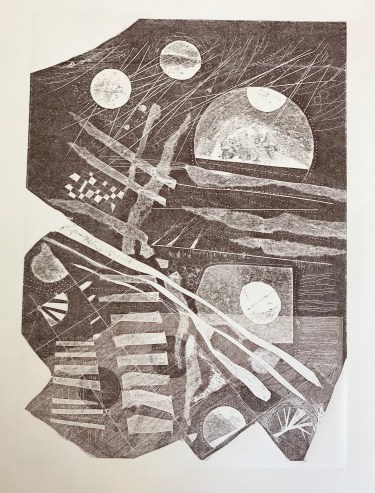 It was hard for me to understand or predict what the print would look like until I saw it printed for the first time. After printing I could see how different marks and peelings printed. I could make a greater range of marks and tones using this board than the mount board that I usually use. Environmount is thinner and therefore easier to cut into shapes and cut into to reveal the lower layers but seemed more robust. We could also recut and reseal after printing if we wanted to make changes.
This was the morning’s work!
In the afternoon Charles demonstrated how to use colours to  ink the lower layers of the plate in a more intaglio way, drawing ink cross the surface with a plastic card and rubbing in and polishing away in areas and then using the roller to ink up the top surface. Inking up the plate in this way allowed for a range of colours and white of the paper in the lower layers and a contrasting colour on the top surface to work together in an interesting way. This time we printed onto Fabriano Rosaspina paper which had been soaked and then blotted until damp.
To the left is the inked up plate and blow is the final print.

2045
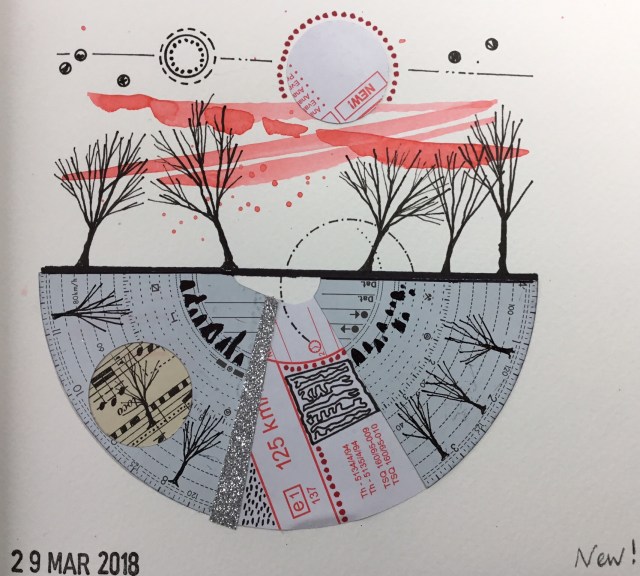
New!
Collage, paint and pen
15 x 15cm
2044
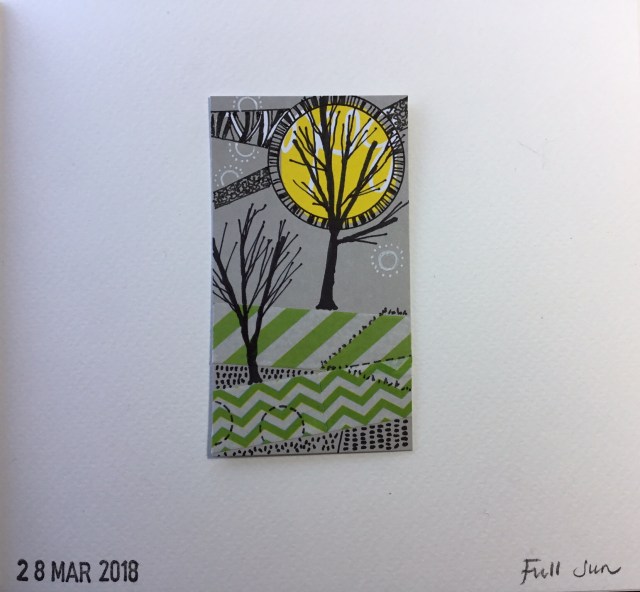
Full Sun
Pen and washi tape on clothes label
5 x 9cm
2043
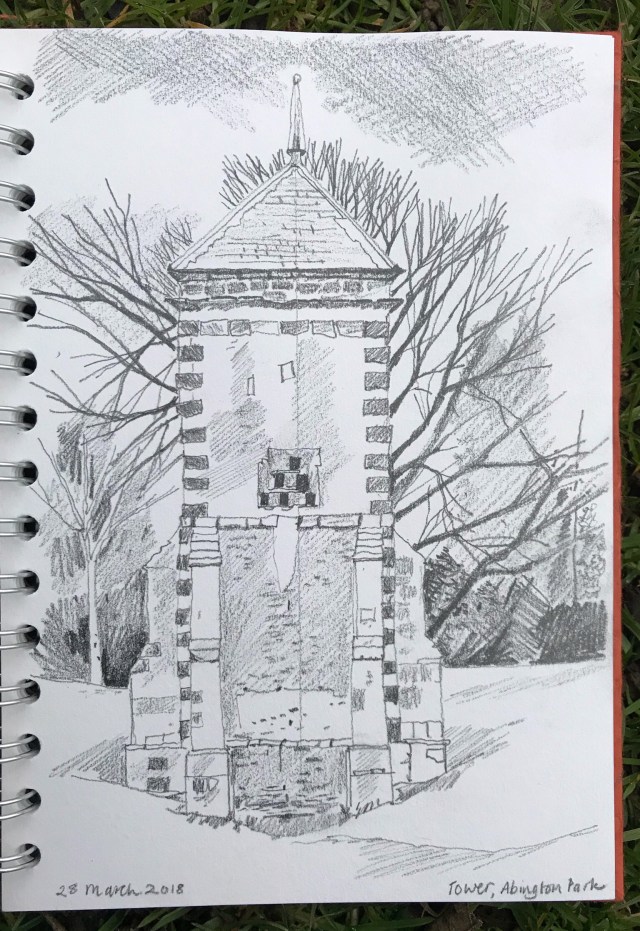
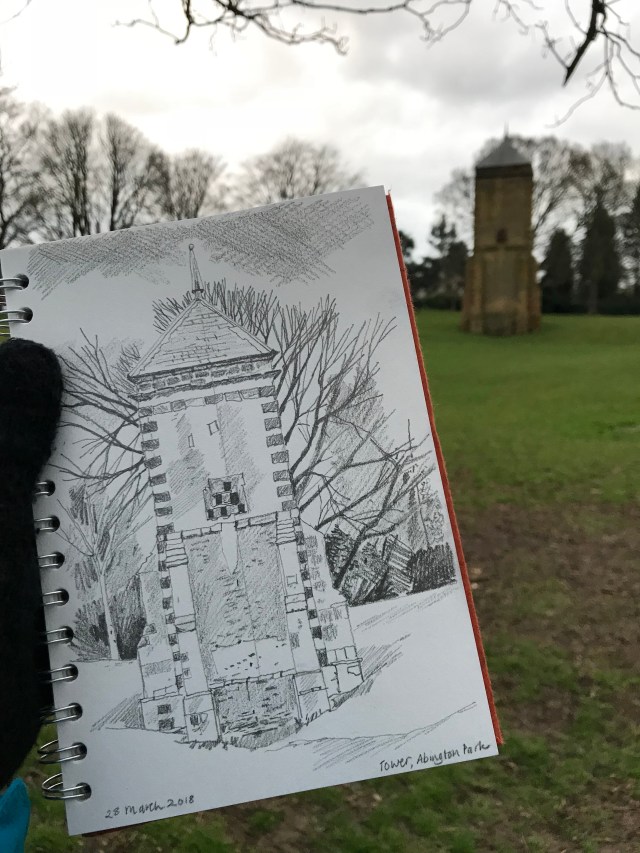
Water Tower, Abington Park
4B pencil
A5

A Daily Visual Journal
Kim Tillyer's Art and Musings on Life in the Cumbrian Mountains.
Art, Design and Words by Kim Tillyer
a drawing made each day in the year leading up to my 50th birthday and beyond...towards 4000!
making art using technology
Parenting a PDA child can be challenging. Find advice, tips and personal experiences to support your journey every step of the way.
Barnard - Hill - Smith - Sim - Goodland - Hallworth - Spencer - Mclean - Ly - Nutt
It's just a blog about me dying
Thoughts from a Caversham Primary Parent
Improve your digital skills one minute at a time
It is never too late to have an adventure
"Harcourt is one of the best Singer/Songwriters to emerge this Millennium " - The Times
Art by Cindie Reiter - painting, making, creating
an unapologetic look at transracial and transnational adoption
Art enables us to find ourselves and lose ourselves at the same time
That'll be the printmaking . . .
Dr Emma Powell